Practical Communication
Training for Quiet and
Different Thinkers
Develop clearer, calmer and more confident workplace communication through practical video lessons, interactive exercises and strategy-based learning.
Free 5-Day Challenge Course
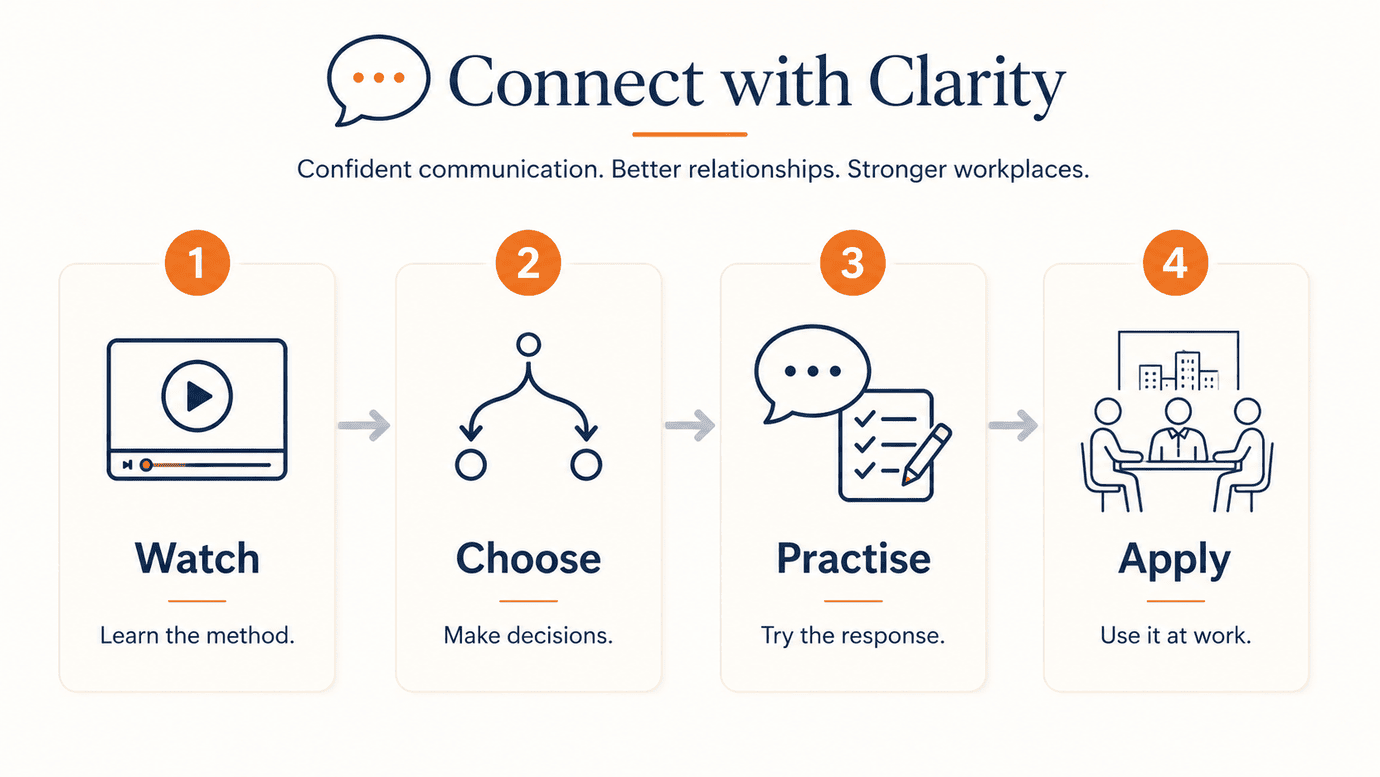
Learn by Watching, Choosing, Practising and Applying
Many communication courses explain what effective communication looks like.
Connect with Clarity goes a step further.
Each course combines clear video lessons with practical exercises, realistic workplace scenarios and strategy-based activities. This gives learners the opportunity to practise decisions before they face similar situations at work.
The aim is not to turn quiet professionals into the loudest people in the room.
It is to help them recognise what is happening, choose a useful response and communicate with greater clarity..The Calm Conversation Method
Prepare clearly. Respond calmly. Close with confidence.
The Calm Conversation Method gives shy, reflective and quieter professionals a practical structure for handling these moments without becoming aggressive, defensive or overwhelmed.
The course combines concise video lessons with realistic conversation scenarios, guided exercises and strategy-based practice. Learners prepare what they need to say, stay clear while the conversation is happening and finish with a practical agreement.
What You Will Learn
Prepare before you speak
Separate facts, feelings and assumptions before the conversation begins.
Open calmly
Use a clear first sentence that reduces tension and establishes purpose.
Respond with structure
Apply the ACRA method: Acknowledge, Clarify, Respond and Agree.
Manage interruptions
Pause, hold your point and return to it without escalating the discussion.
Clarify the outcome
Confirm what has been agreed, who will act and what happens next.
Follow up clearly
Use a concise message to record decisions and avoid ambiguity.
Discover the Calm Conversation Method

The Meeting Flow System
Meetings can move quickly. The subject changes, confident voices take over and the moment to contribute can disappear before you have fully shaped your point. The Meeting Flow System is designed for shy, reflective, dyslexic and neurodivergent professionals who want a clearer way to prepare, contribute and stay involved. The course combines concise video lessons with practical frameworks, realistic workplace scenarios and strategy-based exercises. Instead of simply being told what good communication looks like, learners practise the decisions that make meetings easier to navigate. Prepare with purpose Find your moment Structure your point Manage interruptions Read the room Close with clarity Video lessons explain the techniques, but the learning does not stop there. Interactive meeting scenarios allow you to recognise patterns, choose between different responses and see the likely effect of each decision. You can practise safely, review the feedback and try again before using the same approach in a real meeting. Over time, unfamiliar situations begin to feel more recognisable. Instead of thinking, “What do I say now?”, the aim is to reach the quieter, more useful thought: “I know what I can do here.” The Meeting Flow System is particularly suitable for professionals who: The goal is not to make you the loudest person in the room. It is to help you prepare more clearly, recognise the right moment to contribute and communicate in a way that feels calm, structured and authentic.What You Will Learn
Decide what you want from the meeting before it begins and identify the contribution that matters most.
Recognise natural opportunities to enter a discussion without feeling you have to compete for attention.
Use simple communication frameworks to make your ideas easier to follow and harder to overlook.
Stay calm, acknowledge what has happened and return to your contribution without creating unnecessary tension.
Notice changes in energy, influence, agreement and direction so you can respond more effectively.
Confirm decisions, responsibilities and next steps so that everyone leaves knowing what happens next.More Than Video Training
Who Is the Course For?
The Goal
Discover the Meeting Flow System

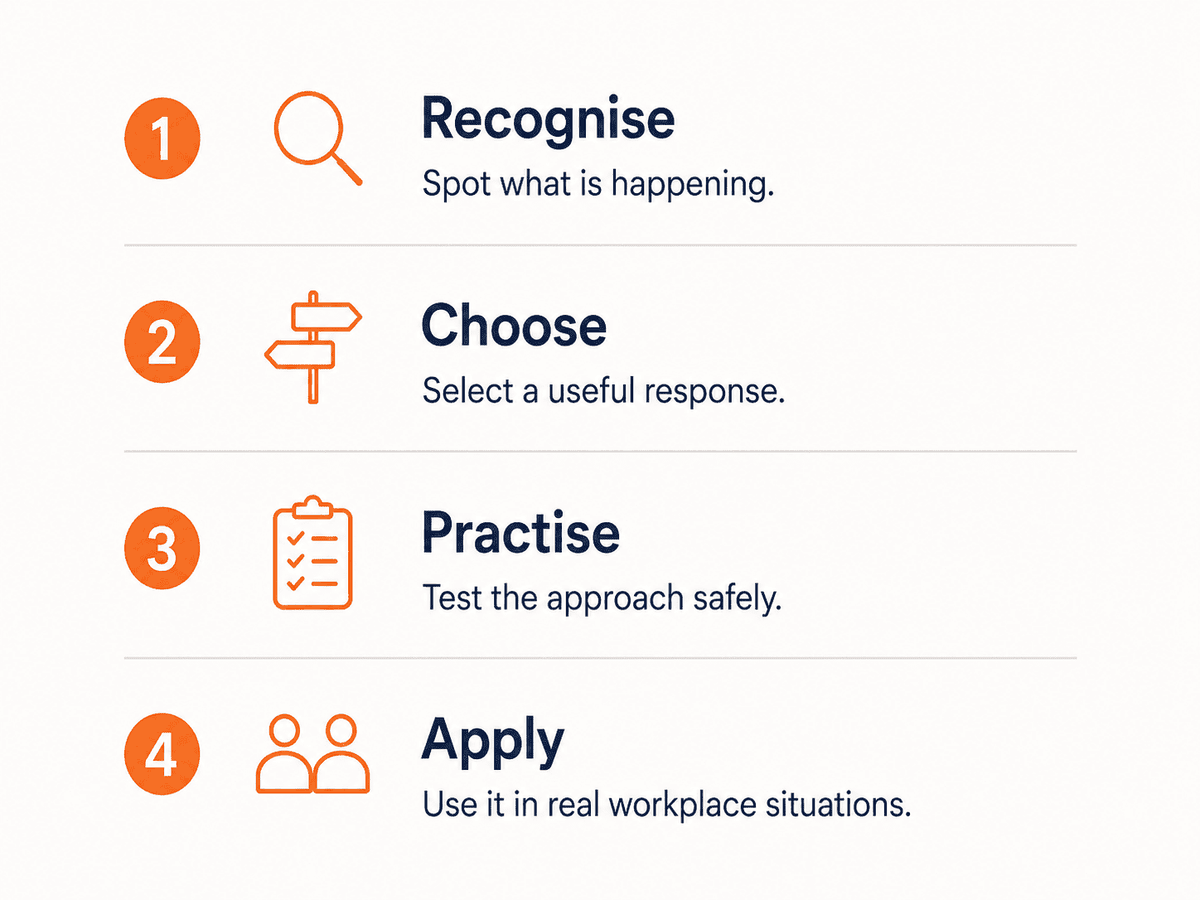
Why Strategy-Based Learning Works
Move Beyond Watchings
Video lessons explain the method. Strategy-based exercises help learners use it.
By working through realistic choices, learners can recognise communication patterns, test different responses and understand the likely effect of each decision.
This creates a safe place to practise before applying the skill in a real meeting or conversation..
The more familiar a situation becomes, the less intimidating it feels when it happens in a real meeting or conversation.
Confidence often grows in this way—not through one dramatic transformation, but through the quiet recognition:
“I know what I can do here.”
Build Clarity One Conversation at a Time
You do not need to become the loudest person in the room.
You do not need to respond instantly or find the perfect words every time.
You need a clear method, realistic practice and a reliable way to find your way back when a conversation moves off course.
Connect with Clarity courses combine focused video lessons with practical exercises, realistic scenarios and strategy-based learning.
They are designed to help you prepare thoughtfully, communicate clearly and apply what you learn in the situations that matter.
The first course in this new series, The Meeting Flow System, will be available from October 2026.